
Eighteen of India's 28 states exceeded the fiscal deficit ceiling of 3 per cent of GSDP in FY25, a deterioration comparable to the Covid year of 2020-21, according to the Comptroller and Auditor General (CAG). The report also noted a decline in states reporting a revenue surplus, with Bihar, Mizoram, and Telangana moving into deficit.
India's fiscal deficit is projected to reach 4.5 per cent of GDP for the current fiscal year, exceeding the budgeted target, as the government's policy responses to the West Asia conflict are expected to strain public finances, according to research firm BMI.

The forthcoming Budget could think of maintaining public capital expenditure at 3 per cent so that domestic resources are available for private investments, points out N R Bhanumurthy.

Reserve Bank Governor Sanjay Malhotra announced that India's foreign exchange reserves stand at a healthy $682.3 billion as of May 29, 2026, providing approximately 11 months of import cover and strong protection against external shocks.

S&P Global Ratings projects India's economic growth to slow to 6.6 per cent in FY27, down from 7.7 per cent in FY26, citing energy stress and a potential sub-par monsoon.

Reserve Bank of India (RBI) Governor Sanjay Malhotra stated that preventing second-round effects of supply shocks, where inflation expectations rise due to prolonged disruptions, is the primary role of monetary policy. He also defended the RBI's foreign exchange market interventions, asserting it did not commit to an 'indefensible peg'.

External Affiars and Finance Minister Pranab Mukherjee on Monday said the government cannot indulge in 'reckless borrowing' and did not have Parliamentary mandate to tweak taxes.

A new white paper released by the Tamilaga Vettri Kazhagam (TVK) government reveals that Tamil Nadu's direct debt has nearly doubled to an alarming 10 trillion in the past five years, exposing significant fiscal strain and a substantial debt burden on every citizen.

The Reserve Bank of India (RBI) has kept its key lending rate, the repo rate, unchanged at 5.25 per cent for the second consecutive time, citing concerns over rising energy prices, supply disruptions from the West Asia crisis, and potential inflationary pressures.

India's primary deficit (Centre and states) for FY21 is assumed to be 6.8 per cent of GDP, according to the Economic Survey tabled in Parliament on Friday. It said the Covid-19 pandemic has created a significant negative shock to demand. Active fiscal policy -- one that recognises that fiscal multipliers are disproportionately higher during economic crises than during economic booms -- can ensure that the full benefit of seminal economic reforms is reaped by limiting potential damage to productive capacity.

India's annual defence production has reached an all-time high of Rs 1.78 lakh crore in FY 2025-26, marking a significant 15.6 per cent growth over the previous fiscal year. This achievement reflects a 110 per cent increase since 2020-21 and highlights the country's expanding defence industrial base, driven by policy support and increased private sector participation.

Ashok Lahiri, a distinguished economist with experience in government, the private sector, and electoral politics, has been appointed as the new Vice-Chairman of NITI Aayog, tasked with strengthening India's reform trajectory and policy-making.

India's wholesale price index (WPI) inflation surged to 9.68 per cent in May, up from 8.26 per cent in April, primarily due to significant increases in the prices of fuel and power, manufactured goods, and food items.
The Confederation of Indian Industry (CII) has proposed a 20-point policy agenda to the finance ministry, including a conflict-linked emergency credit line guarantee scheme and tax rationalisation on energy inputs, to support MSMEs, exporters, and energy-intensive industries affected by the ongoing West Asia war.

Global oil prices fell on Thursday to their lowest levels since before the outbreak of the Iran conflict, offering a significant economic tailwind for India, the world's third-largest crude importer, by easing inflation risks, reducing the import bill and improving the government's fiscal position.

The United States and India are on the verge of finalising a landmark bilateral trade deal, aiming to boost trade to USD 500 billion by 2030, according to US Deputy Assistant Secretary of State Bethany Poulos Morrison. The agreement seeks to open India's 1.4 billion-strong market to American goods on reciprocal terms, with ongoing high-level discussions to recalibrate the pact after recent changes in US tariff policy.

Tamil Nadu Governor RV Arlekar announced that the TVK regime, led by Chief Minister C Joseph Vijay, will take steps to ensure fair financial devolution from the Centre, including pursuing the matter in the Supreme Court. The government also plans to conduct a 'Social Justice Survey' and address the state's severe financial deterioration.

A US federal judge has ruled that the USD 100,000 fee imposed by former President Donald Trump for H-1B visa applications was unlawful, as it lacked congressional approval. The ruling states the fee was a tax, exceeding the administration's authority and impacting skilled global talent.

Indian benchmark indices Sensex and Nifty closed marginally lower due to profit-taking, following the Reserve Bank of India's decision to keep the repo rate unchanged while lowering its growth expectations for the current fiscal year and forecasting higher inflation.

Insights from behavioural economics suggest that an ambitious nudge can be effective if three conditions are met, points out Ram Singh Insights from behavioural economics suggest that an ambitious nudge can be effective if three conditions are met, points out Ram Singh, director, Delhi School of Economics.

India and the United States have reviewed progress on a proposed interim bilateral trade agreement, discussing market access, digital trade, and non-tariff barriers, as they race to finalise a deal before a temporary 10 per cent US tariff regime expires on July 24.

Even if there is an early agreement on a cessation of hostilities in West Asia, the price shock will not go away easily, points out A K Bhattacharya.
Bank of Baroda economists project India's GDP to grow 6.5-6.8 per cent in FY27 but warn that the fiscal deficit could overshoot the budgeted 4.3 per cent target, potentially reaching 4.7-4.8 per cent of GDP due to subsidy overruns, excise duty cuts, and oil marketing company losses.

Balrampur Chini Mills Ltd anticipates annual revenue of approximately Rs 2,000 crore from its new bio-plastic plant in Uttar Pradesh, scheduled for commissioning in the December quarter. The company is investing over Rs 3,000 crore in the Poly Lactic Acid (PLA) plant with a capacity of 80,000 tonnes per annum.
India's economy registered a robust 7.7 per cent growth in the fiscal year 2025-26, an increase from 7.1 per cent in the previous year, with the January-March quarter alone seeing a 7.8 per cent expansion.

The United Nations has revised downward India's economic growth forecast for 2026 to 6.4 per cent from an earlier 6.6 per cent, attributing the change to global uncertainties and economic shocks stemming from the ongoing West Asia crisis.
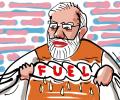
Following through announcements with enforcement of measures is key, as a run through recent Indian economic history shows, points out A K Bhattacharya.

Kerala, Tamil Nadu and West Bengal have been fiscally stressed for a considerable period of time, and there are no easy ways to mobilise revenues to meet the cost of the promised freebies, particularly in the prevailing difficult economic scenario, points out M Govinda Rao.

The demand got a further clout after the economic growth in 2011-12 recorded the nine-year low growth of 6.5 per cent.
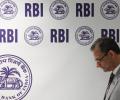
India Ratings and Research predicts the Reserve Bank of India (RBI) will maintain the repo rate at 5.25 per cent throughout FY27, despite potential inflationary pressures from higher fuel prices, with inflation expected to remain within the central bank's tolerance band.

Uttar Pradesh Chief Minister Yogi Adityanath announced that the state has secured investment proposals worth approximately Rs 50 trillion over the past nine years, attributing this economic revival to the enforcement of the rule of law and strategic policy changes. He affirmed UP's trajectory towards becoming a $1 trillion economy by 2029-30.

Japanese automaker Honda plans to introduce over 10 new models, including electric vehicles and compact SUVs, in India by 2030, identifying India as one of its three key markets for future growth.

The reopening of the Strait of Hormuz, following a ceasefire agreement between the US and Iran, is expected to significantly ease India's crude oil supply risks, lower freight costs, and reduce inflationary pressures, as global oil prices have already dropped.

Chief Economic Advisor V Anantha Nageswaran stated that India's economy is projected to return to a 7 per cent-plus growth trajectory by 2027-28 (FY28), or sooner if external conditions improve, despite near-term challenges from the West Asia crisis.

Benchmark lending rates unchanged with repo rate at 5.25%

India's foreign direct investment (FDI) inflows are projected to surpass $90 billion in 2025-26 (FY26), driven by robust policy reforms, free trade agreements, and strong economic growth, according to DPIIT Secretary Amardeep Singh Bhatia.

Nomura has increased its March 2027 target for the Nifty 50 to 25,900, driven by strong corporate earnings and attractive market valuations, even as risks from the West Asia conflict and high oil prices persist.

A prolonged supply shock can transmit to lower incomes, and dampen confidence and sentiment, warns Aditi Nayar, chief economist, head-research and outreach, ICRA.

China is battling a property downturn, industrial overcapacity, sluggish demand and struggling exports.

India's toll collection growth is projected to moderate to 5-7 per cent year-on-year in FY27, a 150-200 basis points reduction, primarily due to the economic impact of the West Asia conflict and a slowdown in commercial traffic, according to Crisil Ratings.
